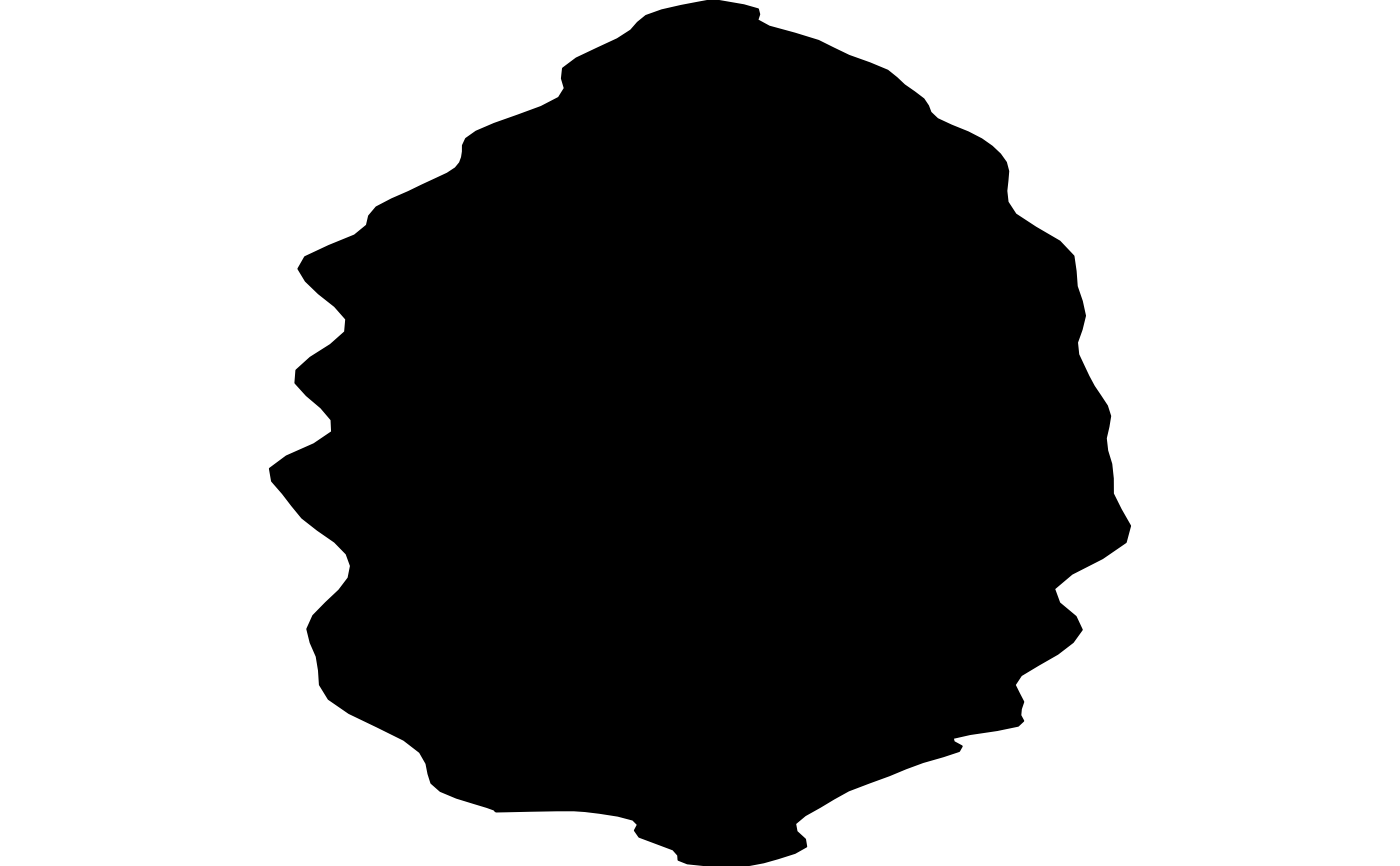
trans_warp displaces each point by simplex/fractal noise sampled at
the point's own (x, y) position (domain warping), giving a wobbly,
non-rigid distortion rather than an affine map.
Usage
trans_warp(
  amount = 0.1,
  distortion_x = noise_field(),
  distortion_y = noise_field(seed = distortion_x@seed + 1L)
)
Arguments
- amount
Displacement amplitude. Must be non-negative. Default
0.1.- distortion_x
A noise_field controlling the x displacement. Default
noise_field().- distortion_y
A noise_field controlling the y displacement. Default
distortion_x, with its seed offset by1.
Details
Unlike trans (translate/rotate/scale/reflect/shear), this can't be represented as a single matrix, since the displacement varies smoothly but irregularly from point to point.
The x and y displacements are sampled from two independent
noise_fields (distortion_x/distortion_y), each rescaled to
[-1, 1] and multiplied by amount. By default distortion_y reuses
distortion_x's own settings with its seed offset by 1, so the two
axes wander independently without the caller needing to specify two
full noise_field objects – the same convention
twisted_path_points() uses internally for shape_twist()'s path.
Like trans, a trans_warp is attached to a drawable via its
trans property/argument, and composes with + – combining it with
another trans_warp, a trans_fn, or a trans produces a
trans_chain, since a non-rigid warp can't collapse into a single
matrix. See trans_fn() for a general-purpose escape hatch taking an
arbitrary caller-supplied displacement function, rather than only a
noise_field-driven one.
See also
Other transform helpers:
trans(),
trans_affine(),
trans_chain(),
trans_fn(),
trans_identity(),
trans_reflect(),
trans_rotate(),
trans_scale(),
trans_shear(),
trans_translate()
Examples
draw(shape_circle(radius = 1, n = 200, trans = trans_warp(amount = 0.15)))
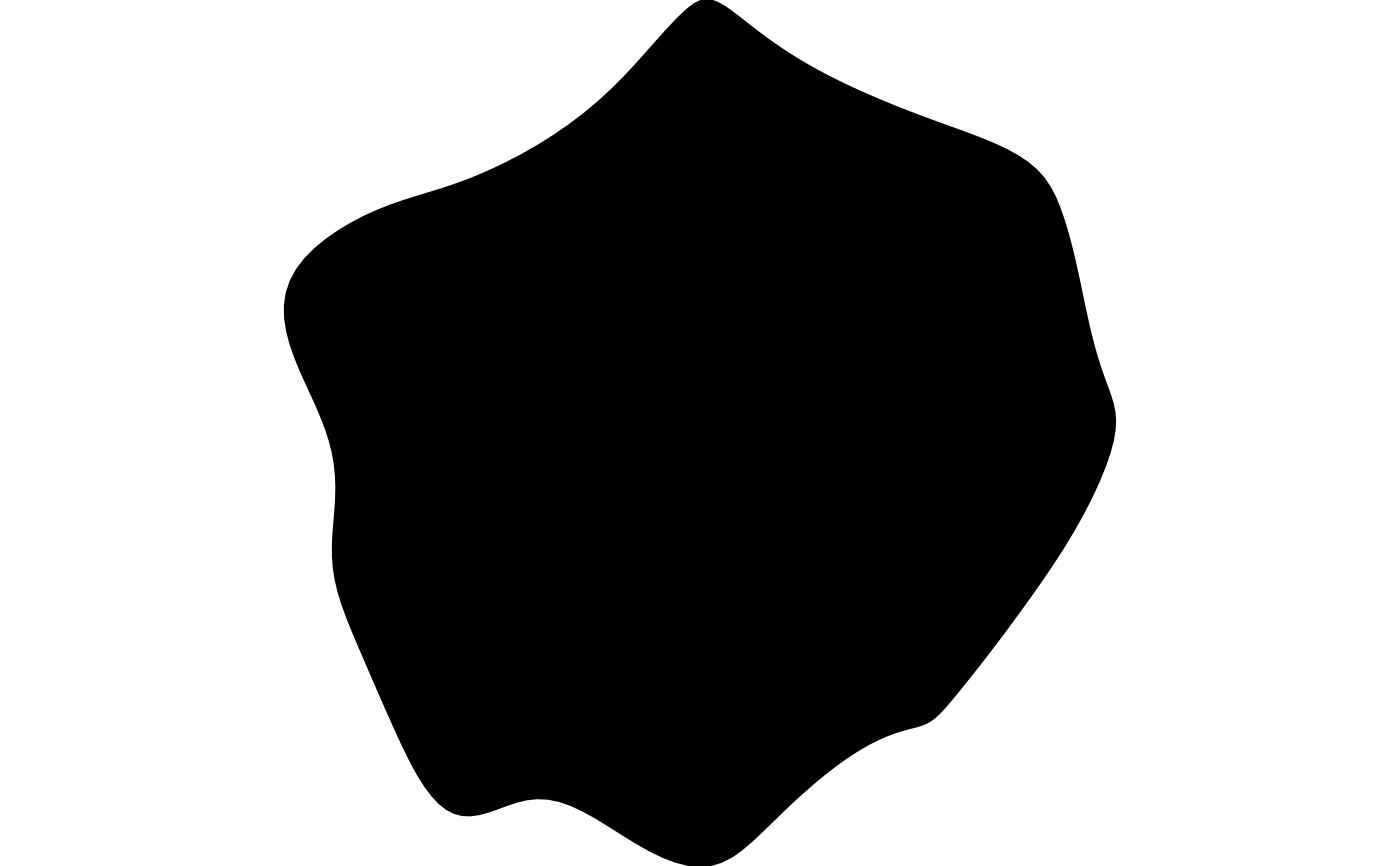 # a smaller amount gives a subtler wobble; distortion_x's own frequency
# controls how quickly the warp varies across space
draw(shape_circle(radius = 1, n = 200, trans = trans_warp(amount = 0.03)))
# a smaller amount gives a subtler wobble; distortion_x's own frequency
# controls how quickly the warp varies across space
draw(shape_circle(radius = 1, n = 200, trans = trans_warp(amount = 0.03)))
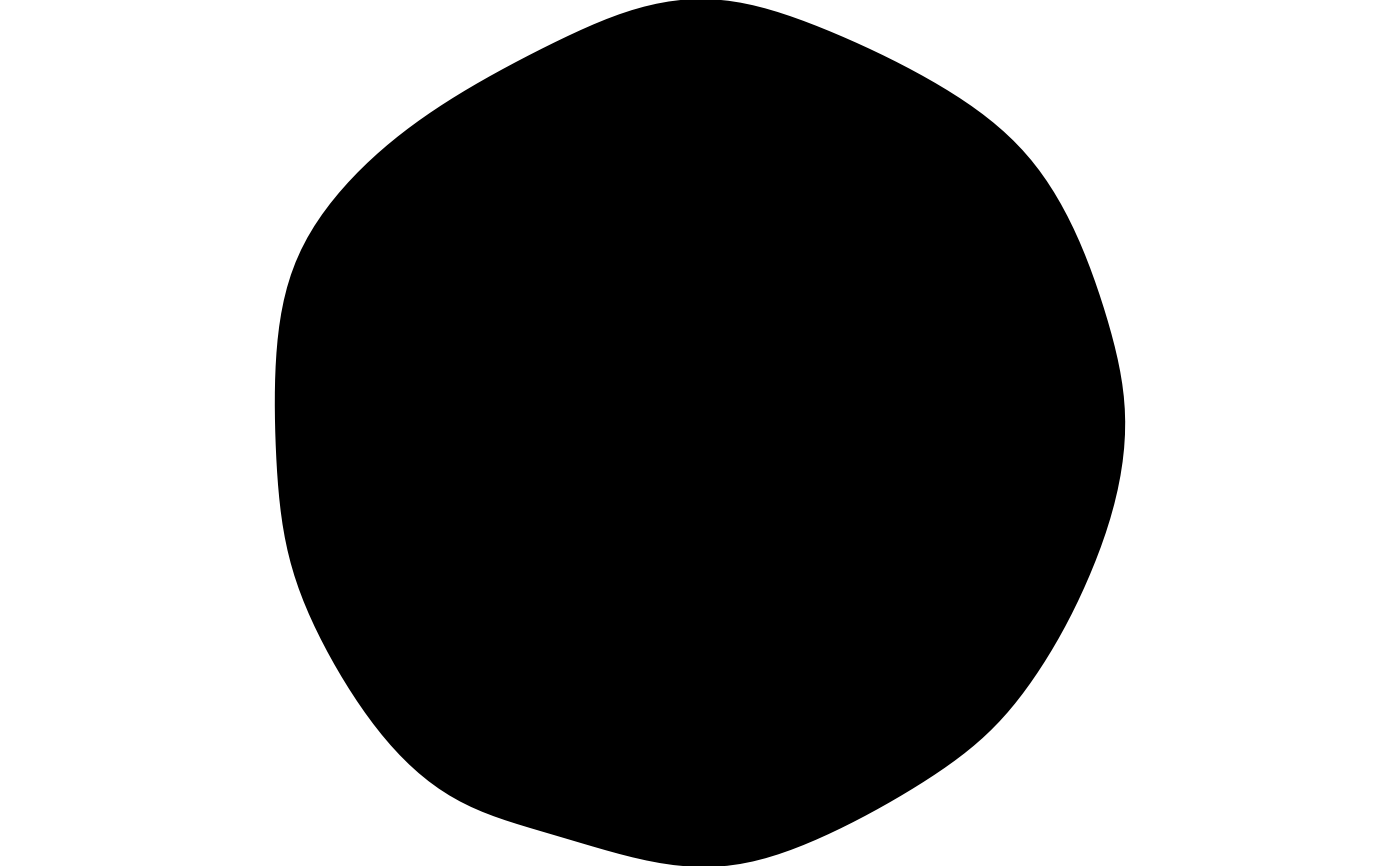 draw(shape_circle(
radius = 1, n = 200,
trans = trans_warp(amount = 0.1, distortion_x = noise_field(frequency = 4))
))
draw(shape_circle(
radius = 1, n = 200,
trans = trans_warp(amount = 0.1, distortion_x = noise_field(frequency = 4))
))