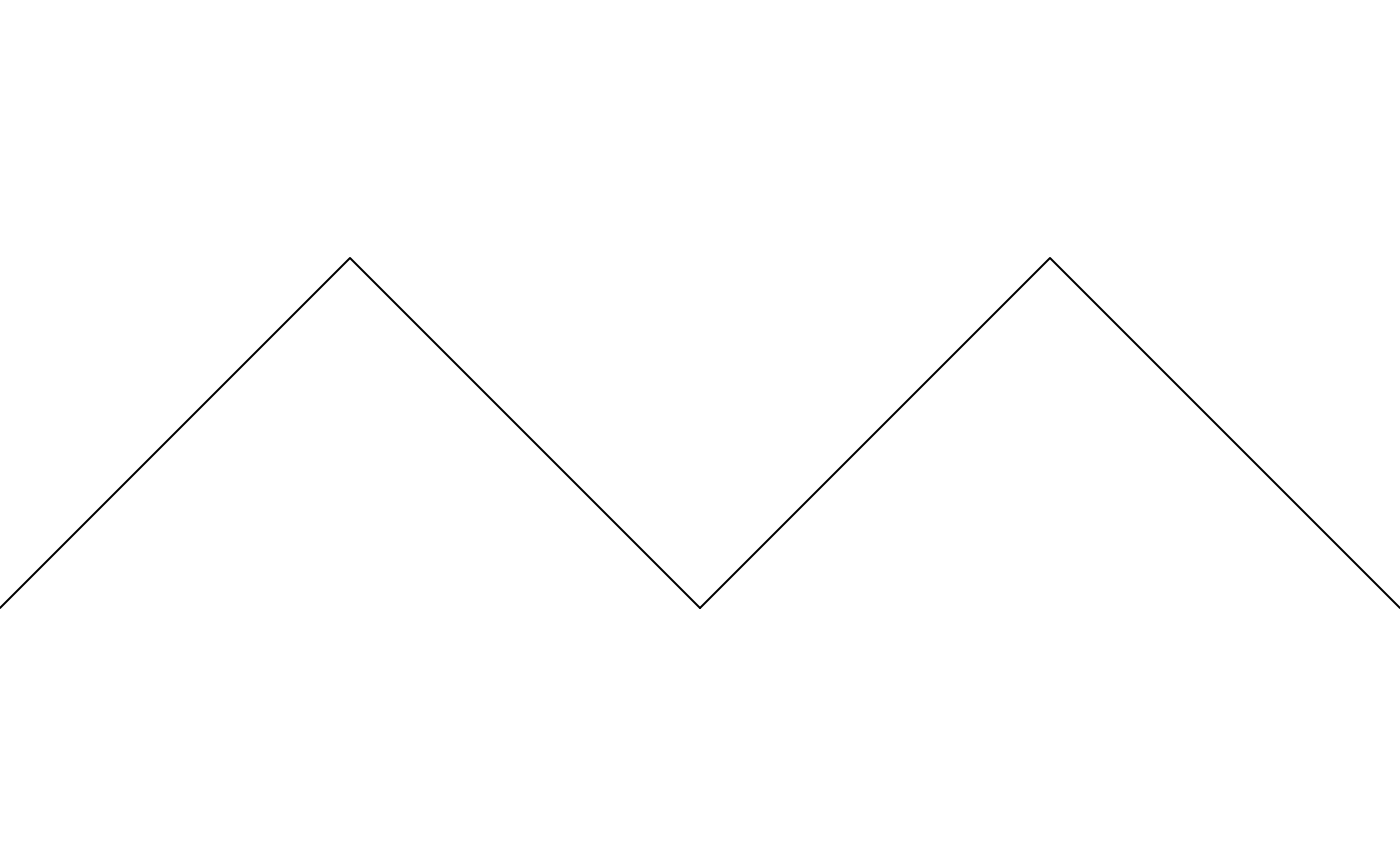
curve_raw is shape_raw's "path"-geometry analog: the user supplies
x/y coordinates directly, connected by straight segments in the
order given, with no smoothing, resampling, or implicit closing edge.
Unlike curve_line() (which requires at least two control points, since
a single-point "line" isn't meaningful), curve_raw places no minimum
on length(x), matching shape_raw's own leniency – it exists
primarily as a convert() target for "freezing" any "path"-geometry
drawable's computed points, the same role shape_raw plays for
"polygon"-geometry drawables.
curve_raws() is a vectorized version of curve_raw(). Since x/y
are themselves numeric vectors of vertex coordinates for a single
path, curve_raws() takes them as a list() of numeric vectors
instead – one vector of vertices per path.
Usage
curve_raw(x, y, id = NULL, trans = trans_identity(), ...)

curve_raws(x, y, id = NULL, trans = trans_identity(), ...)
Arguments
- x, y
For
curve_raw(), a numeric vector of x/y coordinates. Forcurve_raws(), alist()of such vectors instead – one vector of vertices per path.- id
For
curve_raw(), an integer vector the same length asx/y, orNULL(the default, a single sub-path). Forcurve_raws(), alist()of such vectors (orNULLs) instead, one per path.- trans
A trans object applied to the curve's computed points. Default
trans_identity()(no transform).- ...
Arguments passed to
style().
Details
style@fill has no effect for curve_raw() – see drawable's
geometry documentation for why "path" geometries have no interior to
fill. Passing fill via ... is still accepted (it's simply ignored at
draw time), since style() is shared across every geometry.
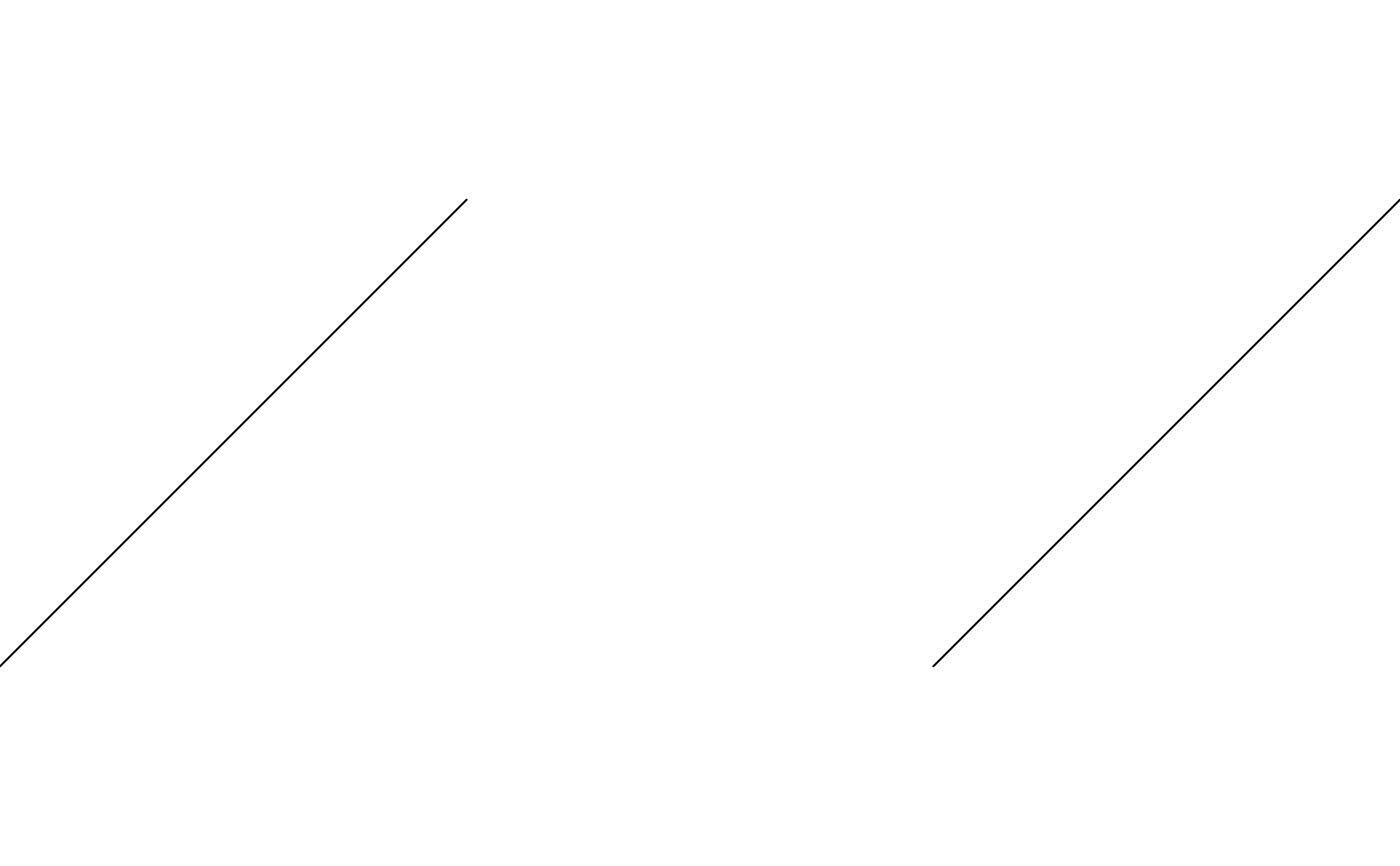
id optionally groups x/y into multiple sub-paths (see xy's own
id), letting a single curve_raw() render as several disjoint
strokes sharing one style.
Every other argument may be a plain vector, recycled against x/y
via purrr::pmap()'s own vctrs-based rules (any length-1 element is
broadcast to the common length; mismatched lengths greater than 1
raise an error). The result is a sketch containing one
curve_raw() per list element/recycled row, rather than a single
drawable.
See also
Other 1D curves:
curve_arc(),
curve_bezier(),
curve_line(),
curve_scribble(),
curve_spiral(),
curve_twist()
Examples
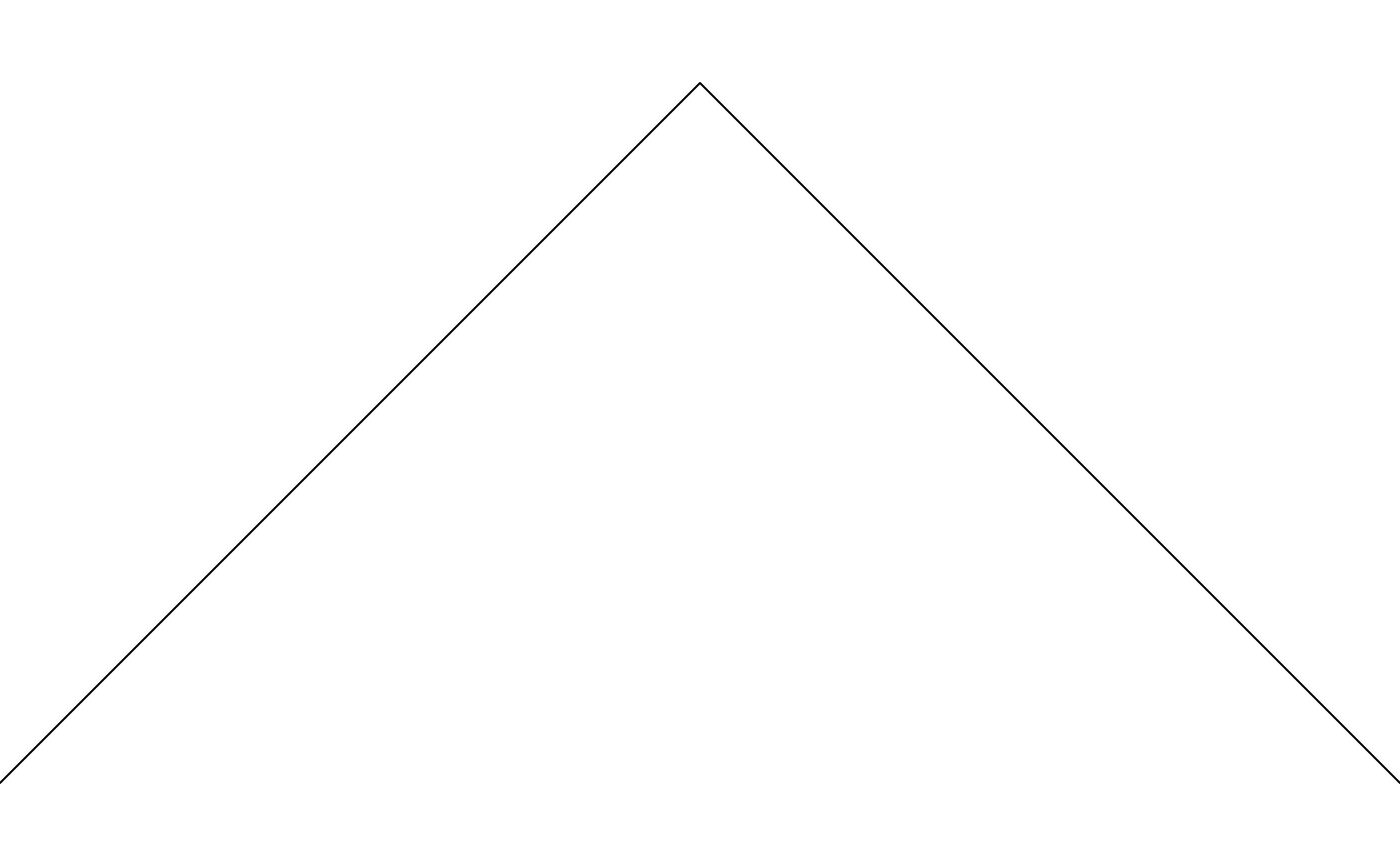
draw(curve_raw(x = c(0, 1, 2), y = c(0, 1, 0)))
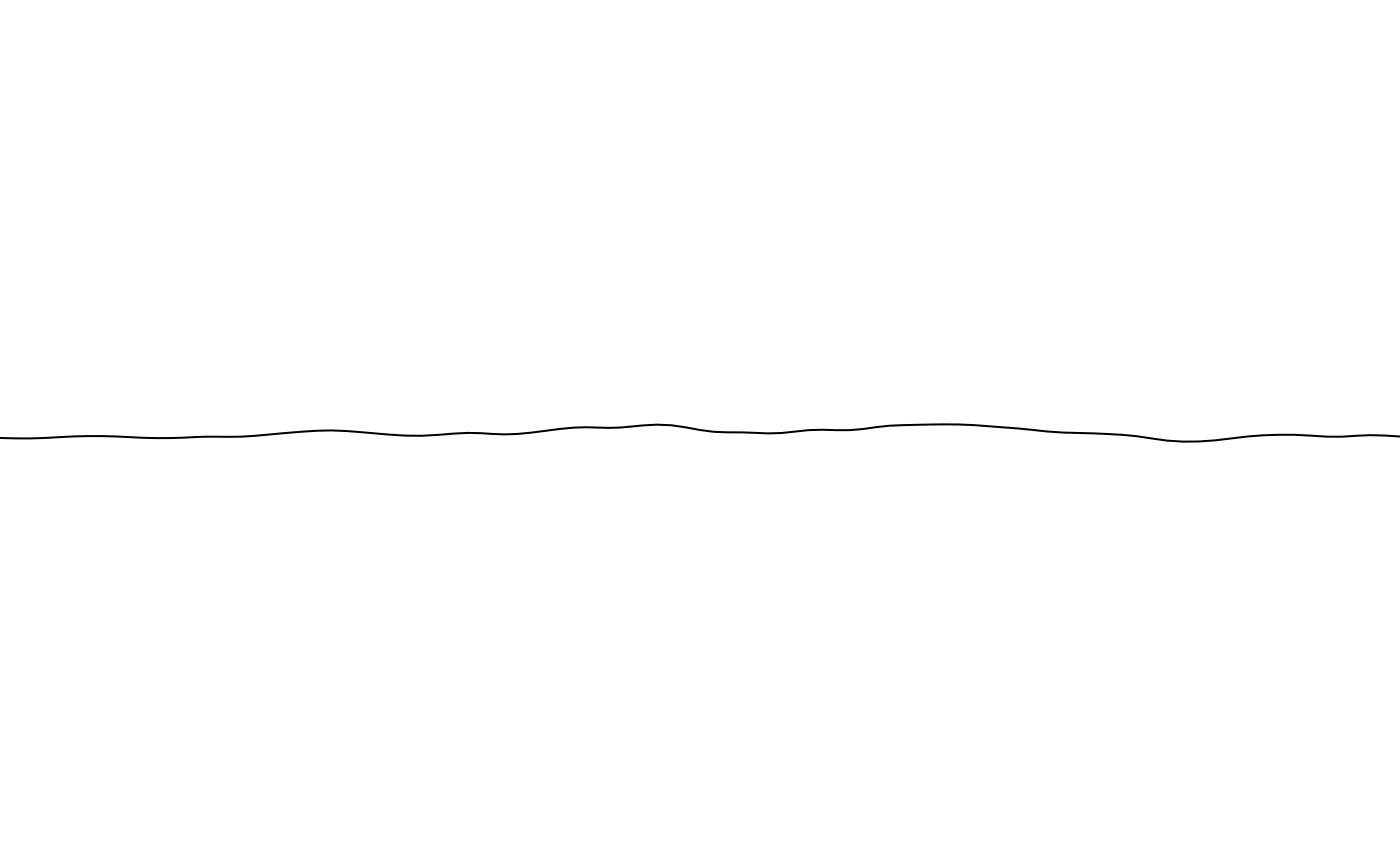
 # useful for "freezing" a wandering path's own computed points
frozen <- S7::convert(
curve_twist(
x = 0, y = 0, xend = 1, yend = 0,
path_distortion = noise_bridge(seed = 99)
),
curve_raw
)
draw(frozen)
# useful for "freezing" a wandering path's own computed points
frozen <- S7::convert(
curve_twist(
x = 0, y = 0, xend = 1, yend = 0,
path_distortion = noise_bridge(seed = 99)
),
curve_raw
)
draw(frozen)
 # id groups x/y into several disjoint strokes sharing one style
draw(curve_raw(
x = c(0, 1, 2, 3), y = c(0, 1, 0, 1),
id = c(1, 1, 2, 2)
))
# id groups x/y into several disjoint strokes sharing one style
draw(curve_raw(
x = c(0, 1, 2, 3), y = c(0, 1, 0, 1),
id = c(1, 1, 2, 2)
))
 draw(curve_raws(
x = list(c(0, 1, 2), c(2, 3, 4)),
y = list(c(0, 1, 0), c(0, 1, 0))
))
draw(curve_raws(
x = list(c(0, 1, 2), c(2, 3, 4)),
y = list(c(0, 1, 0), c(0, 1, 0))
))